
Blog
How Companies Use Write-Offs


In the last 10 years, she has worked with clients all over the country and now sees her diagnosis as an opportunity that opened doors to a fulfilling life. Kristin is also the creator of Accounting In Focus, a website for students taking accounting courses. Since 2014, she has direct write off method helped over one million students succeed in their accounting classes. The aging method is a modified percentage of receivables method that looks at the age of the receivables.

Account Reconciliation

Larger businesses and public companies, which need to provide more reliable and timely financial reporting, are more likely to use the allowance method. Understanding these distinctions enables business owners to choose the approach that aligns with their size, accounting practices, and reporting needs. One of the main advantages of the allowance method is that it provides a more accurate representation of the company’s financial position. By estimating the uncollectible accounts and creating an allowance, businesses can match the bad debt expense with the related sales revenue in the same accounting period. This approach adheres to the matching principle, which states that expenses should be recognized in the same period as the revenue they help generate. The Direct Write-Off Method is a simple approach to accounting for bad debt.
The Essential Guide to Inventory and Warehouse Management with Total Office Manager eBook
To keep the business’s books accurate, the direct write-off method debits a bad debt account for the uncollectible amount and credits that same amount to accounts receivable. If your books still show receivables from customers who haven’t paid in six months, it’s time to face reality. Review your accounts receivable, clean up your ledger, and start using the direct write-off method to keep your financials lean and honest. The faster you what are retained earnings write off dead weight, the clearer your financial picture becomes.
- Since you’re using up some of the estimate, you make a debit entry to the allowance account in the amount of the customer’s invoice.
- If you’re wondering which method is best for your small business, speak with a professional for insights into your specific situation.
- This is because the IRS requires an exact technique to calculate a deduction.
- The allowance for doubtful accounts is set at the end of each year and is used to write off any bad debt expense that occurs during the accounting period.
Q2. What is the difference between direct method and allowance method of accounting for bad debts?
This shall give us a deeper understanding of the process and its intricacies. A write-down is where the book value of an asset is reduced below its fair market value. For example, damaged equipment may be written down to a lower value if it is still partially usable, and debt may be written down if the borrower repays a portion of the loan value. According to the Houston Chronicle, the direct write-off method violates generally accepted accounting rules (GAAP). You will have to decide which method works best for your business, based on the advantages and disadvantages of both methods.
Con: It violates the matching principle
- Likewise, the direct write-off method does not conform to the matching principle of accounting at all.
- Accounts are written-off at the time the debt is determined to be uncollectible.
- Considering our previous scenario, where the ABC company doesn’t receive the bill of $1000 from the client despite their best efforts to collect the amount.
- It should also be clarified that this method violates the matching principle.
- This method allows you to create a provision or reserve account for doubtful debts credited every year against accounts receivable.
The Financial Forecasting For Startups direct write-off approach might be less complicated if you run a small business and don’t frequently deal with bad debt. But larger organizations and those that deal with receivables typically prefer and routinely employ the allowance system. If you’re unsure of which approach is ideal for your small business, go to a specialist for advice on your particular circumstances.
- It’s ideal if you don’t have many uncollectible accounts or if your invoices are typically paid quickly.
- To better grasp the distinction between the allowance method and the direct write-off method, it’s helpful to compare them across several key aspects.
- By receiving the payment, the company is acknowledging that the debt is actually not a bad debt after all.
- Publicly traded companies and large organizations cannot use the direct write-off method in their official filings.
- Credit managers, on the other hand, may view the direct write-off method as a necessary evil.
- Hence, making journal entry of bad debt expense this way conforms with the matching principle of accounting.
Allowance Method Versus Direct Write-Off: A Comparison
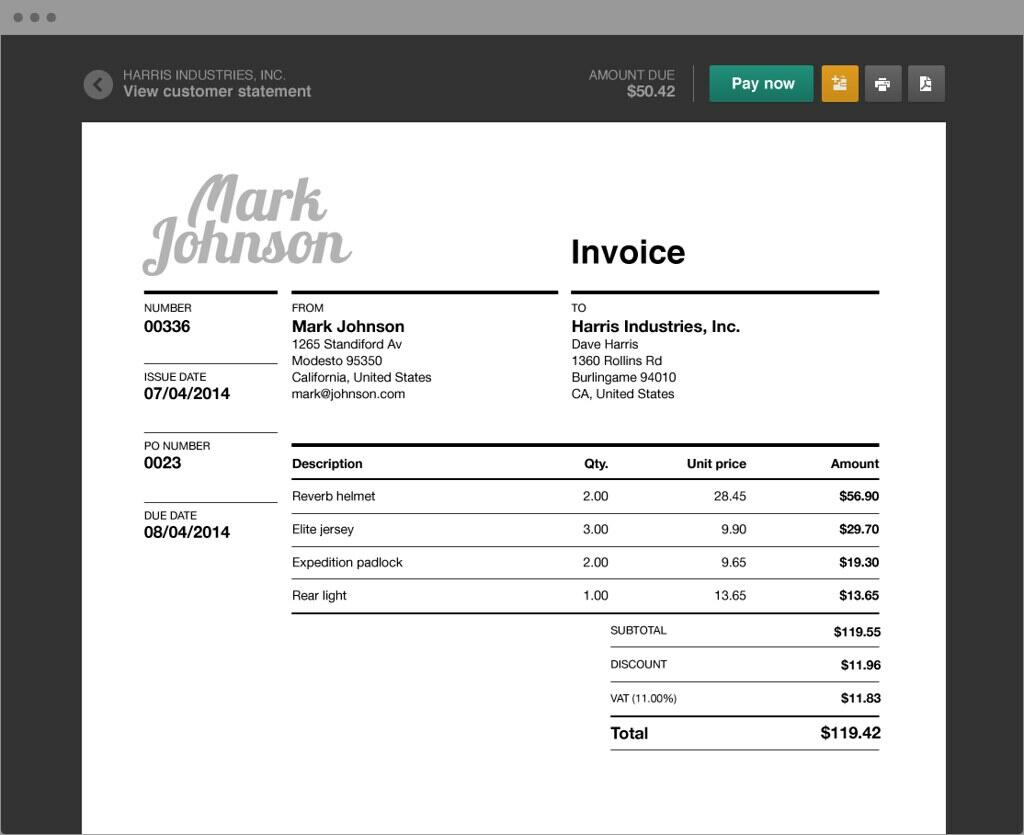
If you use the direct write-off method to manage bad debt, you already have that number ready when you file your business’s taxes. Otherwise, you’ll have to go back through your records again to come up with the number. When a customer pays an invoice that was previously written-off under the Direct Write-off Method, the debt must first be re-instated in the accounting records. Once re-instated, a payment can be applied to the re-instated invoice amount. This scenario illustrates how XYZ Corp. utilizes the allowance method to manage its accounts receivable, making adjustments based on changing assessments of credit risk. It reflects a decrease in the provision required for potential bad debts based on the latest assessment of outstanding receivables.